
Higher baseline temperatures and gaps in safety management mean more workers than ever face heat-related health hazards in the workplace. By Tracey Porter
A Belgian holiday worker engaged by a labour-hire contract business to pick pumpkins on a farm in Queensland likely believed sunburn was the biggest risk he faced while grafting under the summer sun.
But on just his second day on the job, with very little shade available, no safe work procedures in place and under pressure to continue picking and packing even after concerns were raised about the conditions, the backpacker began struggling with the heat.
Acting erratically before collapsing and convulsing then passing out, the worker was rushed to hospital where he was pronounced dead. The cause was later confirmed as multiple organ failure due to, or as a consequence of, heat stroke.
HOT UNDER THE COLLAR
Tragically, the loss of a life under such conditions was far from an isolated incident. SafeWork data shows that in the 12 years to 2013 (the latest available), there were 13 work-related fatalities in Australia from exposure to environmental heat. Of these, 12 occurred from outdoor work, one happened in an enclosed ceiling space and nearly half happened during the worker’s first week on the job.
Coronial inquiries later identified a number of OHS failures on work sites where these fatalities occurred, including by colleagues to recognise the signs of heat-related illness, a lack of coordination between the parties responsible for worker safety, and a lack of education when it came to scheduling work around the hottest parts of the day or season.
The International Labour Organisation (ILO) estimates that 2.4 billion workers encounter excessive heat during their work each year, and that globally excessive heat is responsible for an estimated 22.8 million occupational injuries and 18,970 deaths.
In its 2024 landmark report, ‘Ensuring safety and health at work in a changing climate’, the same organisation stated that WHS protections globally “have struggled to keep up with the evolving risks from climate change, resulting in worker mortality and morbidity”.
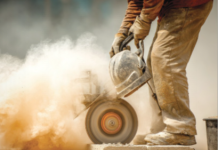
According to SafeWork, the construction, manufacturing and agriculture sectors, alongside emergency services, are particularly vulnerable to exposing workers to heat related illness. This is largely due to risk factors that include working in direct sun, strenuous physical activity and inadequate sun protection.
Not using appropriate PPE such as broad brimmed hats, legionnaire neck flaps, UV-blocking wrap-around sunglasses, and other cooling apparel that helps promotes the body’s thermoregulation, was also identified as a key issue, as was unfamiliarity with employer responsibilities.

LEGAL OBLIGATIONS
But ignorance of the law is no defence when lives are at stake. In the case of the holiday worker, regulators charged the labour hire business with several WHS breaches and fined him $65,000. The farm’s owner was also fined $100,000 over the incident.
Gazelle Kalk, content and training director of workplace health and safety consultancy Peninsula Australia, says with the country facing rising ambient temperatures and more intense heatwaves occurring more regularly, heat stress is increasingly being recognised as a significant workplace hazard. She argues this means it is more important than ever that Australian employers recognise and understand their legal obligations to manage extreme heat.
Under current legislation, namely Australia’s Work Health and Safety Act and Victoria’s Occupational Health and Safety Act, employers and persons conducting a business or undertaking (PCBUs) have a primary duty of care to ensure, so far as is reasonably practicable, that employees and workers are not exposed to health and safety risks, including heat stress, Kalk says.
Employers and PCBUs also have a legal duty to consult with their employees and workers and other duty holders when they are directly affected by health and safety issues.
The law also states that employers and PCBUs must apply the risk management process to manage the risks of heat in the workplace.
“This process involves identifying heat hazards, assessing the risks of heat-related illness, applying the hierarchy of control measures, and regularly reviewing those controls to protect employees and workers in hot environments,” Kalk states.
She notes a number of employers have only limited understanding of their WHS responsibilities, with many wrongly believing that providing drinking water fulfills their safety duty or that all employees have the same heat tolerance.
“There are other factors that can cause heat-related illness, such as high humidity, heavy PPE or lack of airflow,” she says. “Likewise, assuming all employees and workers have the same heat tolerance so implementing the same controls for everyone [and not] considering vulnerable workers, for example, older workers and those with underlying medical conditions.”

BE PREPARED
Heat risk depends on the individual, task, and environment.
Kalk says this is why all employers should ensure they have a robust heat stress management plan in place. The best plans involve having clear written risk assessments, mandatory drinking stations, regular rest breaks in shaded or cooled areas, emergency response procedures for heat-related illness and training protocol for this procedure.
None of this has to affect the bottom line. Kalk says that leading employers understand that by implementing practical measures such as scheduling early shifts in the morning and finishing before peak temperatures occur, providing chilled water directly to workers in work areas, issuing lightweight clothing and PPE, and implementing appropriate work-rest schedules, they can reduce heat risk without impacting productivity.
Photography: Supplied