
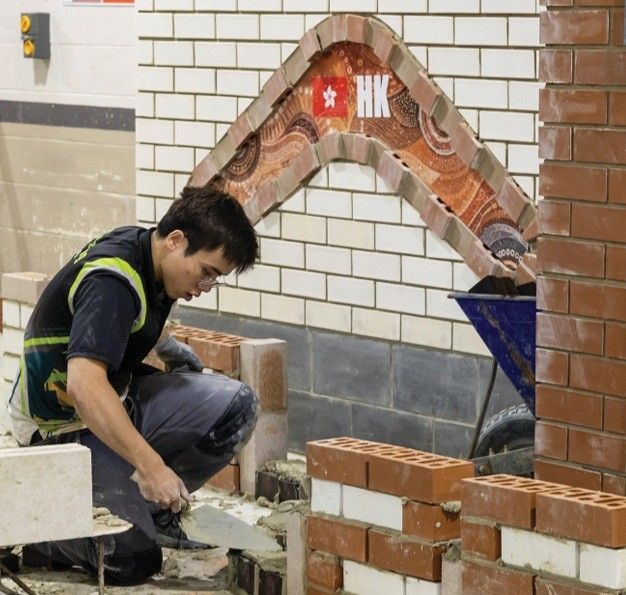
WorldSkills Australia gives young tradies a pathway to pursue excellence. CEO Trevor Schwenke explains how grassroots competition can lead to international opportunities and build stronger skills across Australian industry. By Shane Conroy
WorldSkills Australia provides an opportunity for young tradies to reach beyond competency and pursue excellence beyond the required industry standard.
“WorldSkills gives young people the opportunity to say, ‘I actually want to be better than competent’,” says Worldskills Australia CEO Trevor Schwenke. “We want to encourage our young people to pursue excellence and to believe they can be the best in the world in their chosen field.”
WorldSkills Australia uses regional, national, and international competitive events to help participants develop world-class skills. It operates across 34 regions throughout Australia and connects apprentices, trainees and students with trainers, employers and industry experts. Competitors can advance from regional events to the National Championships, and even be selected in Team Australia to compete in international events.
The 48th WorldSkills Competition, for example, brought more than 1400 young people from over 70 countries and regions to Shanghai from 22 to 27 September 2026. They contested 64 skills across construction, manufacturing, technology, hospitality and service industries.
WorldSkills Australia selected 37 Skillaroos to represent the country in Shanghai. The team included bricklayers, carpenters, plumbers, tilers, electricians, and competitors from many other fields.
Each reached Shanghai through years of training, competition and support from employers, educators and industry mentors.

FROM REGIONAL COMPETITION TO TEAM AUSTRALIA
Schwenke describes a three-phase cycle of regional events, National Championships and international competition.
In regional events, participants typically compete in a six-hour, industry-relevant challenge. Judges assess the work against set criteria, then award gold, silver and bronze medals.
High-performing regional competitors can progress to the three-day National Championships, which bring together around 700 competitors across dozens of trades and skills.
WorldSkills Australia then invites suitable competitors into its national training squad. Selection considers results, age eligibility, attitude and commitment, and can extend beyond National gold medallists to find the right representative.
“It is a 12-month haul for our Skillaroos to get to Shanghai,” Schwenke says. “It takes a lot of commitment, dedication and hard work to get to an international event.”

PREPARING FOR WORLD COMPETITION
Selection in the national team is the beginning of a year of technical and personal development. WorldSkills Australia appoints an industry expert for each international skill, and the experts’ relationship with their appointed Skillaroo often becomes a close, year-long technical mentorship.
Experts work with their mentee to assess their strengths and weaknesses, and create a training plan. Experts may also connect Skillaroos with local specialists in equipment, processes or techniques.
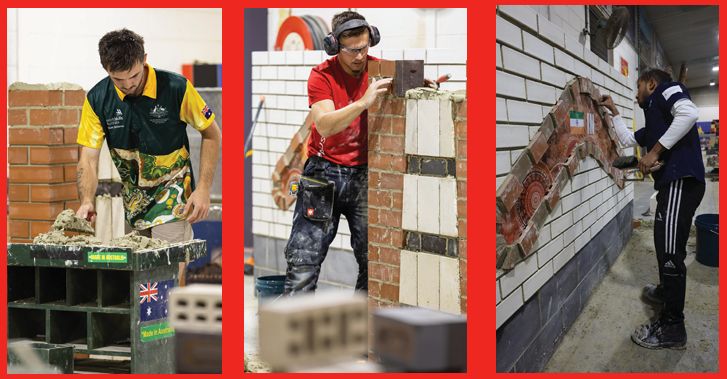
Western Australian bricklayer Jason Seiler was selected in the Skillaroos squad for the 48th WorldSkills Competition in Shanghai after he won a regional gold medal and earned a Certificate of Excellence at the 2025 Nationals.
“Bricklaying follows a universal rule. It is essentially one brick on top of another,” he says. “But everyone has their own way of doing it. That does not just vary between countries. Even across Australia, bricklayers use different techniques.
Someone shows you the ropes, then you make it your own. But there is always something you can improve.” Seiler worked with expert Andrew Hosking and local trainer Wayne Sutherland to prepare for Shanghai, and competed in Taiwan, Hangzhou and Wollongong in the lead-up. Practice in China familiarised him with local bricks and mortar.
“On one project in China, I built a dragon-themed wall that spelled out ‘China’,” Seiler says. “Competition gives you the chance to work on more complex and intricate projects than you would normally encounter onsite.”
SHANGHAI BOUND
That training prepared Seiler for 22 hours of competition across three and a half days in Shanghai. And he has gold in his sights.
“I’m looking forward to that final chance to compete on a world-class stage,” he says. “What is anyone’s goal when they compete? They want to go for gold. That’s what I’ve worked for. If I give it 110 per cent, I’m confident I can win a medal.”
But Schwenke measures success beyond medals. He says the international pathway develops Skillaroos personally and professionally, and can open careers in industry, training and overseas work.
“The Skillaroos are well sought after when they finish competing,” he says. “What they have learned over that period of time can set them up for fantastic careers.”
Seiler already sees the value of his experiences with WorldSkills Australia onsite. At 20, he feels ready to work as a foreman and teach others. He eventually wants to run a bricklaying business, build a team and encourage more young people to enter the trade.
“The level of quality and speed I’ve gained through WorldSkills will serve me for the rest of my bricklaying career,” he says.
Photography: Supplied